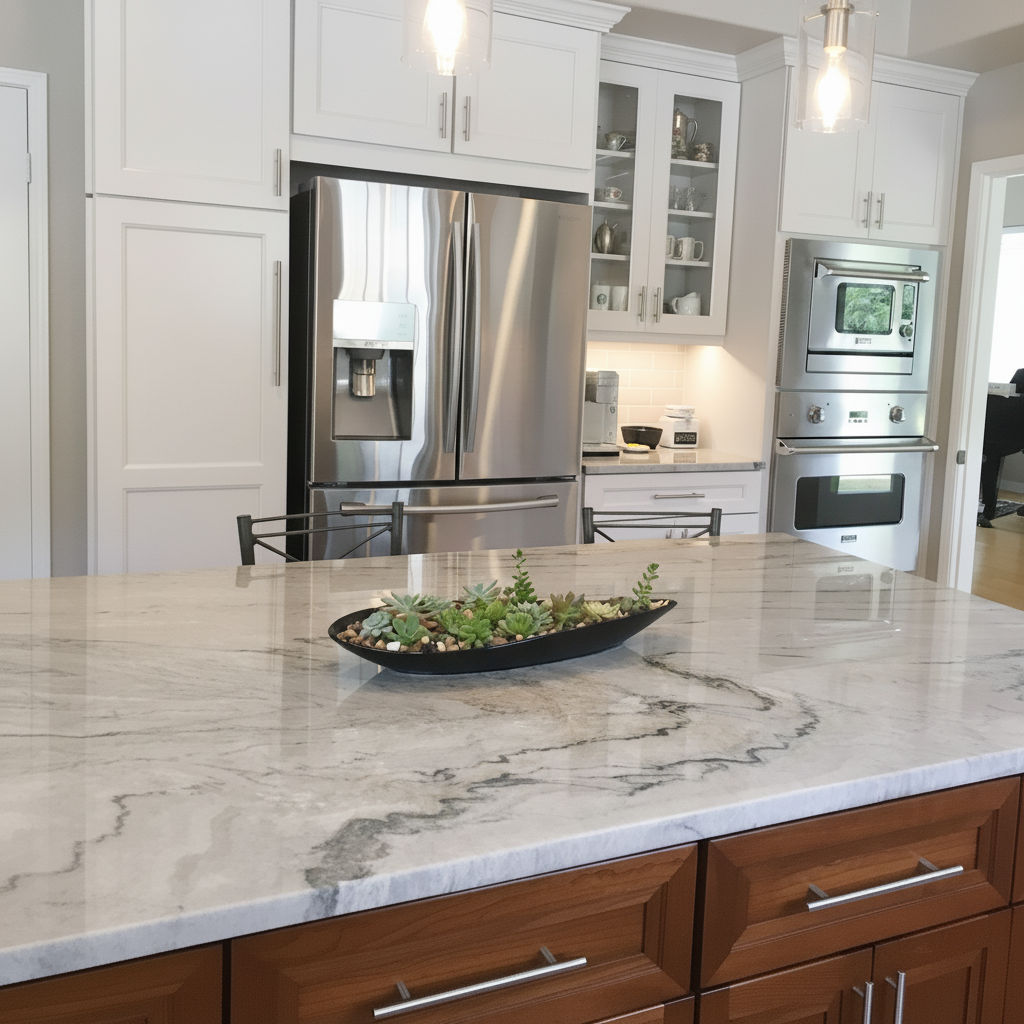
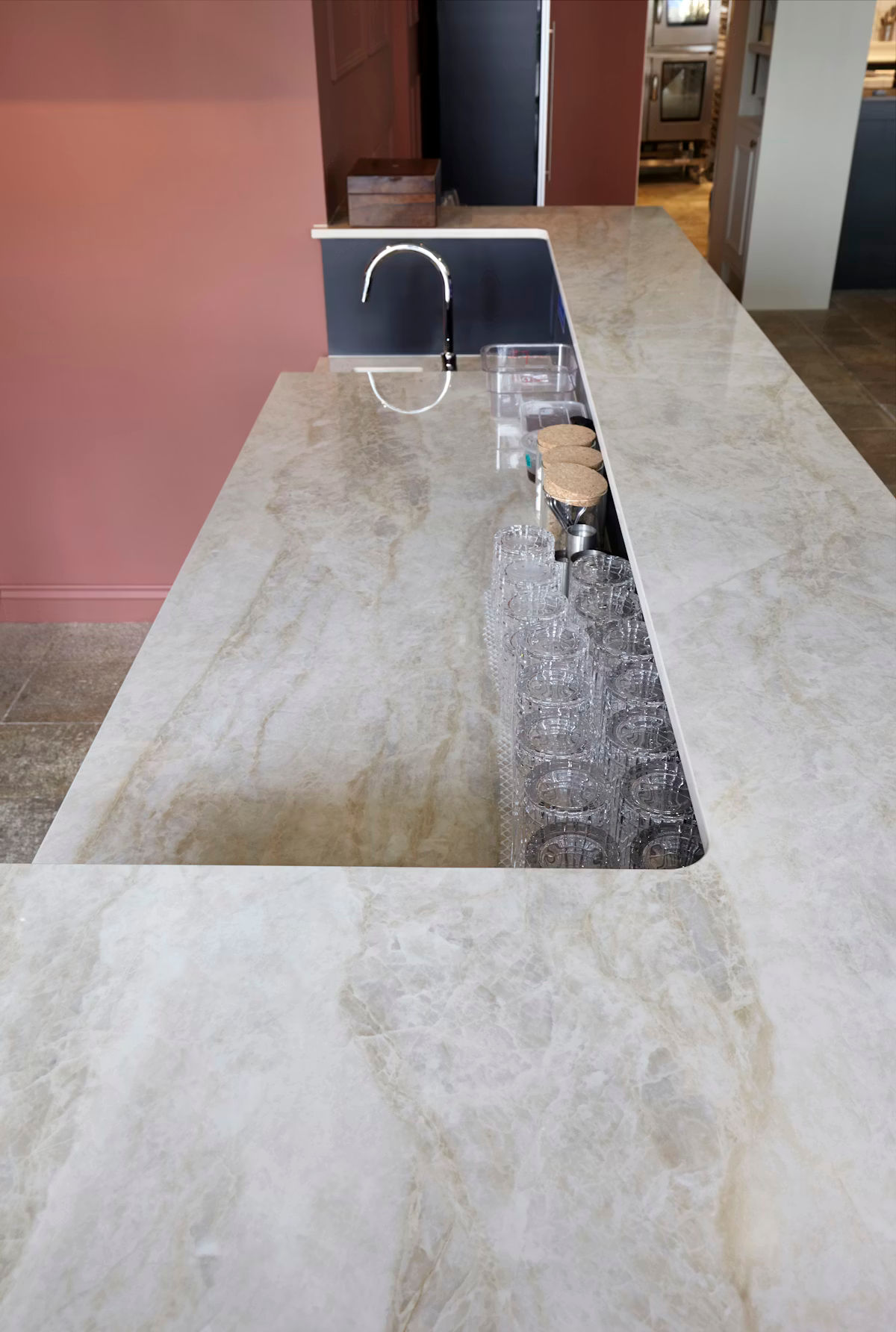
Large-format porcelain slabs offer modern aesthetics for select applications, but may not be the best choice for high-use kitchen countertops.
Porcelain countertop slabs are large-format tiles made from refined clay and minerals, fired at extremely high temperatures. They offer ultra-thin profiles and a wide range of designs that can mimic natural stone, concrete, and other materials.
Porcelain is non-porous, UV resistant, and heat resistant, making it suitable for certain design applications. The material can be manufactured in large formats with consistent patterns and colors.
However, porcelain has specific performance limitations in high-impact kitchen environments that make it less suitable than other countertop materials for most residential kitchens.
Rock-It Surfaces does not generally recommend porcelain for kitchen countertops. Based on our experience, porcelain edges can chip and the material can crack under the normal impact and stress of everyday kitchen use.
We recently replaced porcelain kitchen countertops that had been installed only a few years earlier by another company. The edges were badly chipped in multiple locations, and the surface had developed a crack. These issues developed through normal residential kitchen use, not from abuse or neglect.
While porcelain can perform well in certain lower-impact applications, we believe kitchen countertops require more durable materials that can withstand the daily demands of cooking, food preparation, and family activity.
For kitchen countertops, we strongly recommend considering quartz, quartzite, or Dekton instead.
These materials offer superior durability and impact resistance for kitchen countertop applications.
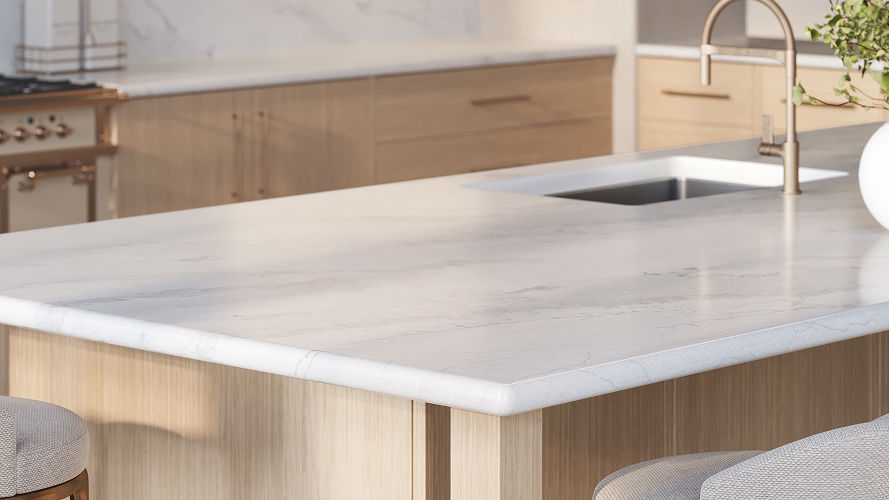
Engineered quartz offers exceptional durability, impact resistance, and edge strength. Non-porous and maintenance-free, it's the most popular choice for modern kitchens.
Visit our San Marcos showroom to explore quartz, quartzite, and Dekton options. We'll help you select the best material for your kitchen project.
Request a Free Estimate